4th SG ANZICS Intensive Care Forum 2017
Increasing bed number not the answer to ICU bed strain
2017-05-10
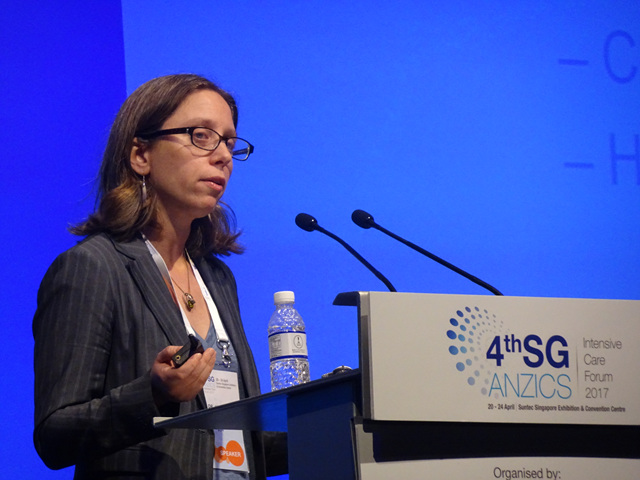
Bed strain in intensive care unit (ICU) can significantly affect patient outcomes, in particular mortality, but increasing the number of beds available does not help solve the issues faced in a strained ICU, according to a presentation at the recent SG- SG-ANZICS Intensive Care Forum (SG-ANZICS 2017) in Singapore.
“[With] more ICU beds built, [people] will find more patients to put in there,” said Dr Hannah Wunsch of the Department of Critical Care Medicine at Sunnybrook Health Sciences Centre in Toronto, Canada, citing comments from a recent editorial. [JAMA 2014;311:567-568] “[Just as] in traffic, the more lanes you build, the more cars there are.”
“As supply constraints are removed, clinicians are more likely to use the service, even for patients unlikely to benefit,” she added. “Increasing beds is not the solution to reduce workload.”
However, delay in ICU access impacts patient outcomes, according to Wunsch, citing a retrospective cohort study involving 264,401 patients which showed that ICU strain was associated with increased patient mortality. The association between ICU census and in-hospital mortality was particularly significant in ICU with higher acuity, ie, sicker patients (odds ratio [OR], 1.06 for the highest decile of acuity vs 0.98 for the lowest decile of acuity). [Am J Respir Crit Care Med 2013;188:800-806]
This was also supported by another study, which showed that increase in ICU strain (as indicated by a higher number of ICU admissions) was associated with a shorter time to death. The effect of ICU strain on time to death was particularly evident among ICUs with closed staffing models, but no statistical significant impact was observed for open staffing ICUs. [Intensive Care Med 2016;42:987-994]
With high patient-to-intensivist ratios (PIRs) in strained ICUs, there were raising concerns that ICU staff were becoming overburdened by workload. Some of the main perceptions of strain and overworked among physicians attending crowded ICUs (ie, PIR of >14:1) stemmed from “feeling stressed out from caring for too many patients” (58 percent vs 30 percent; p=0.042) and not having "adequate time for teaching" (61 percent vs 24 percent; p=0.016) compared with those working in less strained ICUs. [Crit Care Med 2012;40:400-405]
The optimal PIR was 7.5 (ie, ratio associated with the lowest odds of in-hospital mortality), above which the mortality odds increased with increasing PIR, said Wunsch, referring to a study on 49,686 patients in 94 ICUs across UK. [JAMA Intern Med 2017;177:388-396]
Although not much data were available on the ideal number of patients that an intensivist should be caring for to minimize ICU strain, Wunsch called for this to be contemplated about seriously, starting at the local level in order to address the issue of ICU physician and nurse burnout. Ways to reduce flow issue at the local level should also be addressed, she added.
“[There is a] need to focus on the ways (besides increasing beds) to decrease bed strain,” Wunsch concluded.
| 이전글 | ICU readmission not necessarily associated with poor care, negative outcomes |
|---|---|
| 다음글 | Lung hyperinflation by mechanical ventilation safe for certain trauma patients |


