American Thoracic Society 2019 (ATS 2019) International Conference
6-week varenicline preloading cuts smoke rates, prolongs abstinence
2019-07-11
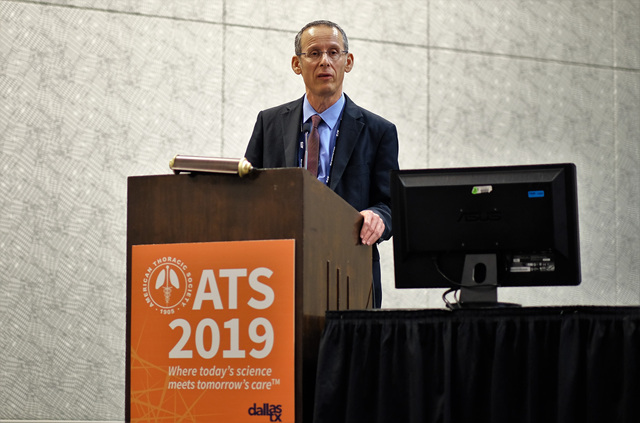
Extended preloading of varenicline for 6 weeks before the target quit day (TQD) safely improves the efficacy of the prescription medication in facilitating smoking cessation at 12 weeks and at 6 months, according to a study presented at the American Thoracic Society (ATS) 2019 International Conference, held at Dallas, Texas in the US.
This randomized, double-blind, placebo-controlled trial involved an 18-week treatment period and 12-week follow-up to determine the efficacy and safety of 6-week varenicline preloading in supporting smoking reduction and increasing smoking abstinence at 24 weeks after randomization.
A total of 242 adults motivated to quit were randomly assigned (1:1) to receive either varenicline preloading for 6 weeks prior to the TQD (extended preloading group [EPG]) or placebo for 5 weeks, followed by varenicline for 1 week before the TQD (standard preloading group [SPG]).
Biochemically validated continuous abstinence during weeks 6 through 18 and 30 was the primary outcome, while secondary ones included biochemically validated prolonged abstinence at the above time points and point prevalence abstinence at weeks 4, 6, 7, 12, 18 and 30.
Rates of continuous abstinence were significantly higher in the EPG than the SPG at weeks 18 (24.8 percent vs 7.4 percent; p<0.001) and 30 (23.1 percent vs 4.1 percent; p<0.001). Point prevalence abstinence rates were likewise significantly higher in the EPG at all time points (range, 18.2–43.8 percent vs 3.3–24.8 percent; p range: p<0.001 to p=0.003). [ATS 2019, abstract A2378]
However, adverse effects, particularly nausea (p<0.001) and vomiting (p=0.030), were significantly more frequent in the EPG at week 4. Overall, extended preloading was deemed safe, causing only mild and well tolerated symptoms.
“Extending the duration of prequit varenicline from 1 week to 6 weeks reduced smoke rates in the run-in period and enhanced the efficacy of varenicline for smoking cessation at 12 weeks and at 6 months,” said sub-investigator Prof Gabriel Izbicki, MD, from Shaare Zedek Medical Center in Jerusalem, Israel.
“Varenicline preloading appears to be a valid option for smokers willing to reduce the number of cigarettes per day (CPD), with the goal of quitting in the next weeks,” he added.
In this study, smoking abstinence referred to self-reported abstinence, validated biochemically by expired carbon monoxide (CO) readings of ≤5 ppm, and had to correlate with a concomitant urinary cotinine level ≤1 mg.mL-1 at weeks 6 and 30.
Efficient smoking reduction, on the other hand, was defined as self-reported decrease of ≥50 percent in the number of CPD and is usually accompanied by a decrease in expired CO and urinary cotinine.
An effective prescription medication for facilitating smoking cessation, varenicline is usually initiated 1 week before the TQD.
In an earlier study, evidence showed that 4-week use of varenicline, instead of 1 week, before the TQD could lead to substantial reduction in ad lib smoking and improve 12-week quit rates. [Arch Intern Med 2011;171:770-777]
| 다음글 | ASCENT-COPD underlines CV safety of aclidinium bromide in COPD |
|---|


