International Association for the Study of Lung Cancer (IASLC) 18th World Conference on Lung Cancer (WCLC)
Exercise improves lung function, QoL in advanced lung cancer
2017-12-12
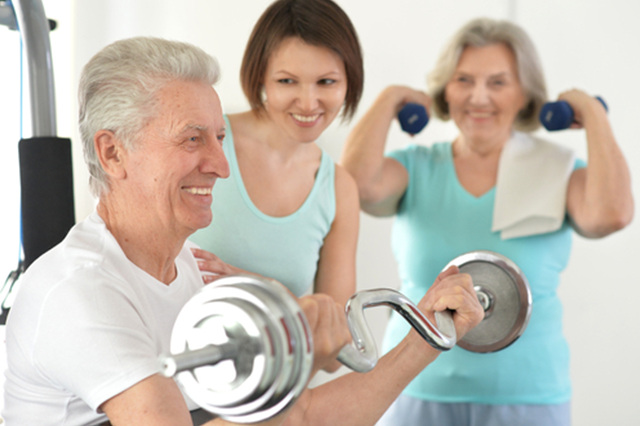
Exercise improves lung functional capacity and quality of life (QoL) in patients with advanced lung cancer, says a physiotherapist.
“Improving or maintaining functional capacity means being able to take on activities of daily living and not burdening caregivers, which is what the majority of patients fear,” said Dr Morten Quist (Ph.D), physiotherapist and clinician-researcher at the Department of Health Science, University Hospital of Copenhagen, Denmark. Presenting the study findings at the International Association for the Study of Lung Cancer (IASLC) 18th World Conference on Lung Cancer (WCLC) in Yokohama, Japan, Quist said: “In this way, being as active as possible for as long as possible can reduce the potential burden and help patients experience a better QoL.”
Older studies showed that patients with advanced lung cancer experience decline in functional capacity after diagnosis and during treatment. The majority of healthcare professionals believe that relaxing and resting is the best intervention for this group of patients, and the researchers wanted to study if exercise intervention would be a better choice.
The researchers screened approximately a thousand patients with advanced stage lung cancer who were undergoing chemotherapy and recruited a total of 218 eligible adult patients. Participants were randomized to receive standard care (control group) or a 12-week physical and psychosocial intervention (intervention group). The researchers measured patient’s aerobic capacity, functional capacity and QoL at baseline and at 12 weeks.
The researchers developed an intervention plan called EXHALE which was conducted twice a week. The intervention included cardiovascular, strength and relaxation training. The intervention included 10 to 15 minutes warm up on a stationary bike, 30 minutes strength training and 10 to 20 minutes cardiovascular training. Peak power output was measured, so each training session could be individualized even though it was a group based intervention, he explained.
To reap the beneficial effects of cardiovascular training, the intervention must be of high intensity. Thus, in this intervention, the researchers treated the patients as one would an athlete, he added.
At the end of the study, both the intervention and control groups experienced improved functional capacity; functional capacity was assessed using the 6-minute walk distance (6MWD) test. The intervention group had a bigger improvement than the control group (41.1 m vs 16.5 m) but it was not statistical significance (p=0.07). Studies have shown that functional capacity usually decreases when patients are undergoing chemotherapy, and the conflicting finding of this study may be due to selection bias, explained Quist.
Another important study finding was significant improvement in QoL in the intervention group, whereas the control group showed no difference in QoL. Quist said the improvement in QoL may be linked to the improved functional capacity.
The study is yet to be published but is currently the largest study of its kind, he added. Patients were given the opportunity to continue with the exercise intervention after the 12-weeks study period. Nearly half opted to continue.
| 이전글 | Early palliative care no impact on patients with malignant pleural mesothelioma |
|---|---|
| 다음글 | Heat-not-burn products bring wave of change in smoking cessation efforts |


