International Association for the Study of Lung Cancer (IASLC) 18th World Conference on Lung Cancer (WCLC)
Newer heat-not-burn products may be next tobacco scourge in Japan
2017-12-12
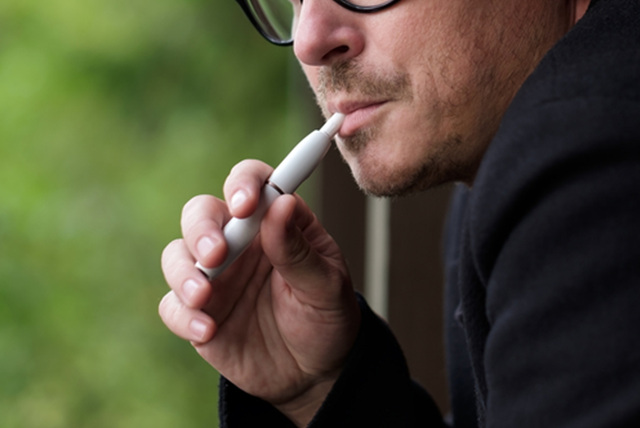
Barely has the dust settled on e-cigarettes before the next cigarette replacement product, based on the heat-not-burn (HNB) principle, emerges to derail tobacco control efforts.
Speaking at the International Association for the Study of Lung Cancer (IASLC) 18th World Conference on Lung Cancer (WCLC), Dr Yumiko Mochizuki, of Tobacco Free Japan and the Japan Cancer Society, said there is an urgent need to provide scientific evidence to regulate this product.
In Japan, the tobacco industry is stepping up marketing efforts to capture the HNB market share and it is up to researchers and the government to provide scientific evidence to enable appropriate regulation of this new industry, said Mochizuki.
Japan has been successful in tackling the smoking problem even though the country was previously a smoker’s paradise. Thanks to efforts by leading medical and civil societies, the smoking rate is now lower than 20 percent—similar to other developed countries. However, Mochizuki warns that the tobacco companies are fighting back to regain the lost market share through the introduction of HNB tobacco products.
The danger of HNB devices should not be underestimated, said Mochizuki, as a Google trend analysis of searches involving HNB products and keywords spiked in 2017. This attests to the interest the general public has in these new products and also to the effectiveness of marketing efforts by tobacco companies. Whilst vape was an industry driven largely by non-tobacco companies, HNB devices, on the other hand, are spearheaded by the likes of Philip Morris International (IQOS), Japan Tobacco International (Ploom Tech) and British American Tobacco (Glo).
The new HNB devices and products are marketed as harm reduction paraphernalia, where it is claimed these new products cut toxic emissions by 90 to 99 percent. Mochizuki called out these claims as being dubious at best, as these products still contain a significant amount of nicotine and more importantly, still produce toxic vapours. Therefore, HNB products remain addictive and pose a real threat to public health.
Part of the ‘allure’ of these devices is they are seen as attractive and acceptable by the community at large. Tobacco companies are already beginning to exert their influence in all sectors of Japan be it science, technology, society, policy, business and the media. Rigid regulatory frameworks need to be in place before the situation reaches a point of no return. Mochizuki suggested working with patient advocacy groups to empower the movement calling for tobacco control in all its forms.


