2017 Annual Meeting of American Society for Radiation Oncology (ASTRO)
Immunotherapy combined with RT gives promise to metastatic cancers
2017-12-21
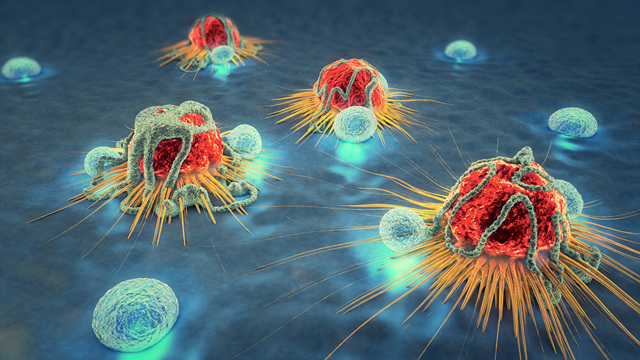
Combination therapy with the CTLA-4 blocker, ipilimumab, and stereotactic ablative radiation therapy (SABR) is effective in cancers with metastatic lung and liver lesions, according to results presented at the 2017 Annual Meeting of the American Society for Radiation Oncology (ASTRO).
In a nonrandomized phase II trial of 100 cancer patients with metastatic lung and liver disease given concurrent or sequential SABR with four cycles of ipilimumab (3 mg/kg every 3 weeks), a clinical benefit rate (CBR; stable disease [SD] plus partial response [PR]) of 30–67 percent was observed. [ASTRO 2017, abstract LBA 5]
The five-arm trial included patients with metastatic disease resistant to standard therapies. Median progression-free survival (PFS) of patients given SABR plus immunotherapy was 5 months, while median overall survival (OS) was 12 months.
Lesions from non-small-cell lung cancer had the highest CBR, at 67 percent.
Patients who received sequential radiation to the lung rather than to liver metastases showed a trend of better PFS (p=0.055) and OS rates (p=0.059) at 12 months.
The concurrent and sequential lung radiation groups also showed higher rates of SD and PR (SD, 45 and 50 percent; PR, 10 and 0 percent) vs the concurrent and sequential liver radiation groups (SD, 35 and 30 percent; PR, 5 and 0 percent).
The majority of patients (55 percent) had adenocarcinomas, 13 percent had squamous cell carcinomas, and 32 percent had tumours of other histologies.
“A large percentage of patients achieved SD several months after treatment, meaning that while their tumours did not shrink, they did stop growing,” said lead investigator Professor James Welsh from the University of Texas MD Anderson Cancer Center, Houston, US.
“Some tumours demonstrated a potential abscopal effect, where tumours that were not irradiated became smaller after we treated different sites with radiation… For instance, one patient with anaplastic thyroid cancer, one of the deadliest types of cancer, experienced a reduction in size of the primary tumour after we irradiated a lung metastasis. This patient had controlled disease for more than 13 months,” explained Welsh.
Around one-fourth of the patients experienced grade 3 toxicities related to immunotherapy, including colitis (8 percent), diarrhoea (7 percent), rash (4 percent), elevation of liver enzymes (3 percent), hypophysitis (3 percent), hyperbilirubinaemia and intestinal obstruction (both 1 percent).
“We found that the addition of stereotactic body radiation therapy for patients on immunotherapy is efficacious and well-tolerated…Follow-up research in larger clinical trials is needed to determine which types of tumours and patients will respond best to this immunotherapy-radiation approach,” concluded Welsh.
Patients in the trial were enrolled into one of five cohorts: concurrent lung radiation, sequential 50 Gy lung radiation, concurrent liver radiation, sequential 50 Gy liver radiation, and sequential 60 Gy liver or lung radiation, with 20 patients in each treatment arm.
Concurrent radiation was given on day 2 of the first immunotherapy cycle, while sequential radiation was given 1 week after the second immunotherapy cycle.
| 이전글 | Hypofractionated vs conventional radiotherapy: Equally effective, safe after mastectomy |
|---|---|
| 다음글 | Radiotherapy prior to chemotherapy boosts PFS in NSCLC patients with limited metastases |


