ESMO Asia 2017 Congress
Positive maternal, foetal outcomes possible following antenatal chemotherapy in women with cancer
2018-01-05
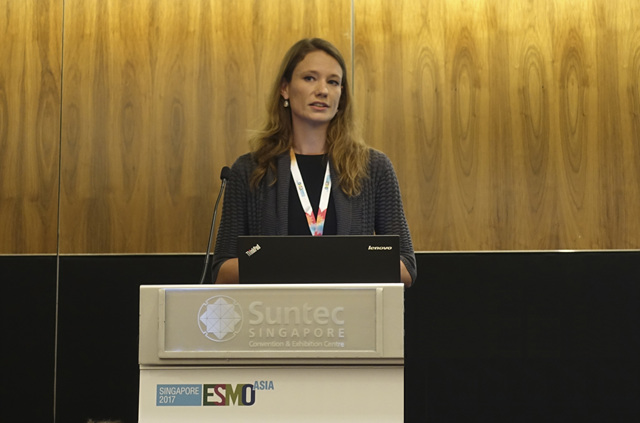
Antenatal chemotherapy may not necessarily result in poor neonatal outcomes in women diagnosed with cancer during pregnancy, according to a study presented at ESMO Asia 2017.
“Results are mainly reassuring, the effect of pregnancy on the maternal outcome does not seem to be negative and [antenatal chemotherapy] is not an independent risk factor for a worse maternal outcome. We also found reassuring results on the effects of antenatal therapy on foetal safety,” said lead author Dr Jorine de Haan from the Department of Obstetrics & Gynaecology at KU Leuven, Leuven, Belgium.
Using data from the INCIP* database, researchers conducted an international cohort study involving 1,170 patients diagnosed with a primary cancer during pregnancy between 1996 and 2016. Primary outcome measures included small-for-gestational-age (SGA) and neonatal intensive care unit (NICU) admission.
Breast cancer was the most common cancer diagnosed during pregnancy (39 percent, n=462), followed by cervical cancer (13 percent, n=147), lymphoma (10 percent, n=113), ovarian cancer (7 percent, n=88), and leukaemia (6 percent, n=68).
Researchers evaluated the participants every 5 years for over 20 years. Over time, changes in oncological management and obstetrical outcome were observed, where more pregnant women with cancer were treated with chemotherapy (risk ratio [RR], 1.31) and there were more live births (RR, 1.04).
Eighty-three percent of patients underwent antenatal chemotherapy only with ≥1 chemotherapeutic agents.
There was a lower incidence of preterm births (RR, 0.93), iatrogenic preterm births (RR, 0.91), and NICU admission (RR, 0.91) among infants of patients treated with antenatal chemotherapy.
However, there was a higher likelihood of infants being small-for-gestational-age (SGA; RR, 1.16), though SGA was also associated with higher maternal age (odds ratio [OR], 1.36), systemic disease in patients diagnosed with cancer during pregnancy (OR, 1.86), and the use of platinum-based chemotherapy (OR, 3.12).
Although antenatal chemotherapy was the most common treatment given in this study, de Haan suggested that a management plan should be considered, which involves a multidisciplinary team approach in treating pregnant women diagnosed with cancer.
Further studies are warranted to elucidate the association between SGA and chemotherapy, said the researchers, who called for a long-term follow-up of children exposed to chemotherapy.
*INCIP: International Network on Cancer Infertility and Pregnancy
| 이전글 | Palbociclib is well-tolerated in HER2-negative MBC patients |
|---|---|
| 다음글 | Prenatal exposure to chemotherapy may not be detrimental to cognitive development in children |


