European Society of Cardiology (ESC) Congress 2016
Andexanet alfa rapidly reverses anticoagulant-related bleeding
2016-10-17
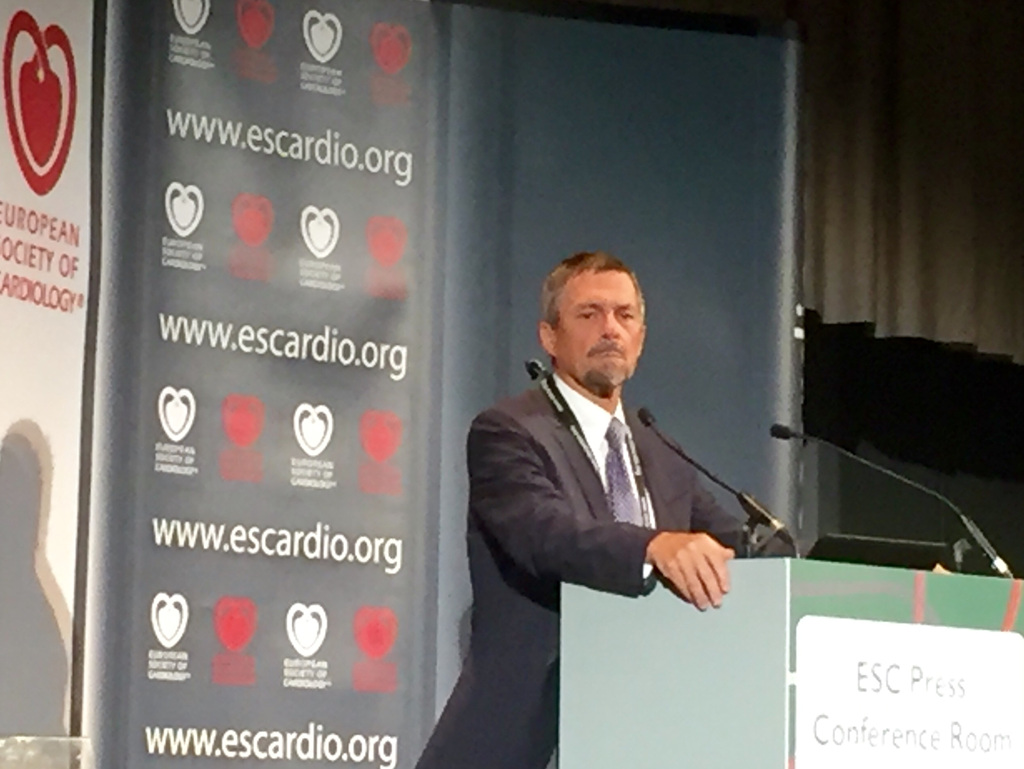
Andexanet alfa rapidly reverses acute major bleeding associated with the use of factor Xa inhibitors and is well tolerated, interim results of the ANNEXA-4 study have shown.
In the ongoing study, an initial bolus of andexanet alfa reduced median anti-factor Xa activity by about 90 percent in patients who developed acute major bleeding within 18 hours after the administration of rivaroxaban (n=26), apixaban (n=20) or enoxaparin (n=1). [N Engl J Med 2016, doi: 10.1056/NEJMoa1607887]
“The median reduction in anti-factor Xa activity from baseline to end-of-bolus was 89 percent in rivaroxaban recipients and 93 percent in apixaban recipients. These levels remained similar during the subsequent 2-hour infusion of the factor Xa inhibitor antidote,” reported lead investigator Dr. Stuart Connolly McMaster University in Hamilton, Canada, at the European Society of Cardiology (ESC) Congress 2016.
“The study was conducted in an elderly [mean age, 77.1 years] and sick population with a high burden of prior MI, stroke, deep vein thrombosis, pulmonary embolism and heart failure,” said Connolly. “Most patients received factor Xa inhibitor therapy for atrial fibrillation or venous thromboembolism. Bleeding was predominantly gastrointestinal or intracranial.”
“At 12 hours after andexanet infusion, clinical haemostatic efficacy was adjudicated as good or excellent in 79 percent of patients in the efficacy population [n=47]. Clinical haemostatic efficacy was achieved in 84 percent of patients with gastrointestinal bleeding and 80 percent of patients with intracranial bleeding,” he continued.
In the safety population (n=67), thrombotic events occurred in four patients (6 percent) within 3 days and 12 patients (18 percent) within 30 of andexanet administration. “The rates of thrombotic events were consistent with the high-risk profile of the patients,” Connolly noted.
“Anticoagulation was restarted in 18 patients [27 percent] by 30 days,” he added. “Ten deaths [15 percent] occurred by 30 days, six of which were cardiovascular.”
Recruitment for the study is ongoing and the investigators have currently enrolled 140 patients.
| 이전글 | Prasugrel and ticagrelor show similar efficacy and safety in STEMI |
|---|---|
| 다음글 | N-acetylcysteine reduces infarct size in STEMI |


