European Society of Cardiology (ESC) Congress 2016
N-acetylcysteine reduces infarct size in STEMI
2016-10-17
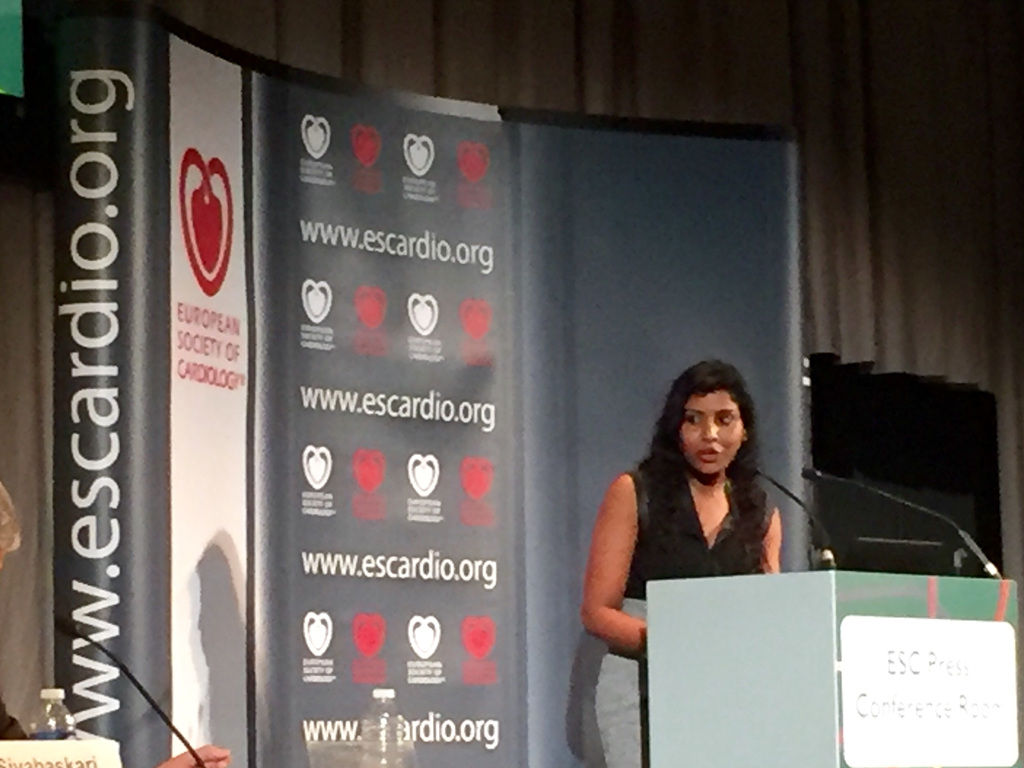
N-acetylcysteine (NAC), when added to glyceryl trinitrate (GTN), reduces myocardial infarct size by approximately a third in patients with ST-segment elevation MI (STEMI) undergoing percutaneous coronary intervention (PCI), an Australian study has shown. [Pasupathy S, et al, ESC 2016, abstract 2227]
“Myocardial infarct size is a key determinant of clinical outcomes. It is affected by the duration of ischaemia, as well as reperfusion injury caused by the high oxidative stress during myocardial reperfusion,” explained investigator Dr Sivabaskari Pasupathy of the University of Adelaide, Australia.
In the NACIAM (N-acetylcysteine In Acute Myocardial Infarction) study, 112 patients with STEMI from three Australian tertiary hospitals were randomized to receive 48 hours of low-dose intravenous GTN (2.5 µg/min) plus either intravenous NAC (loading dose, 20 mg/min for 1 hour; 10 mg/min for 47 hours) or placebo before undergoing PCI. The patients’ creatinine kinase levels were measured every 4 hours for 24 hours. Cardiac MRI was performed at day 5 and 3 months to assess the primary efficacy endpoints of early and late myocardial infarct size, myocardial salvage and left ventricular ejection fraction.
“We observed a 5.5 percent absolute reduction in median myocardial infarct size at day 5 in patients receiving NAC [p=0.02],” reported Pasupathy. “In addition, myocardial salvage was significantly increased in the NAC group [60 vs 27 percent; p<0.001], and the effect was greater in patients who had shorter duration of ischaemia.”
Transmural infarct (54 vs 79 percent; p=0.02) and late infarct size (5 vs 10 percent; p=0.02) were also significantly reduced in patients receiving NAC vs placebo. However, anterior infarct size, microvascular obstruction and left ventricular ejection fraction did not differ significantly between the two groups. Creatinine kinase levels were lower in the NAC group, but this did not reach statistical significance (p=0.08).
At 2 years, death or cardiac readmission was significantly reduced in patients receiving NAC (6 vs 27 percent; p=0.02). Rates of acute adverse events, such as hypotension, bleeding and renal dysfunction, were similar in both groups.
“NAC minimizes reperfusion injury by scavenging reactive oxygen species and reducing the levels of NADPH oxidase. Meanwhile, GTN increases tissue reperfusion by causing vasodilatation and suppressing platelet aggregation and inflammation,” explained Pasupathy.
“As shown in the NACIAM study, adding intravenous NAC to low-dose intravenous GTN was safe and led to improvements in infarct size and myocardial salvage,” she concluded. “However, its impact on clinical outcomes requires a larger study to confirm.”
| 이전글 | Andexanet alfa rapidly reverses anticoagulant-related bleeding |
|---|---|
| 다음글 | Alirocumab cuts need for apheresis in heterozygous FH patients |


